Set format
Four blooms, four stakes
Each ceramic bloom attaches to its own metal stake, so the cups can be placed around beds, pots or planters rather than clustered in one spot.
Garden field note · ceramic water station
A four-piece set of hand-glazed ceramic blooms made to hold a shallow amount of fresh water near the flowers bees already visit.
Promotional link. We may earn a commission from a qualifying purchase. The current route is for US and Canadian visitors.

What the format includes
The documented set combines four shallow ceramic cups with four black 9-inch stakes. The seller describes the glaze as weather-resistant; practical frost care still matters.
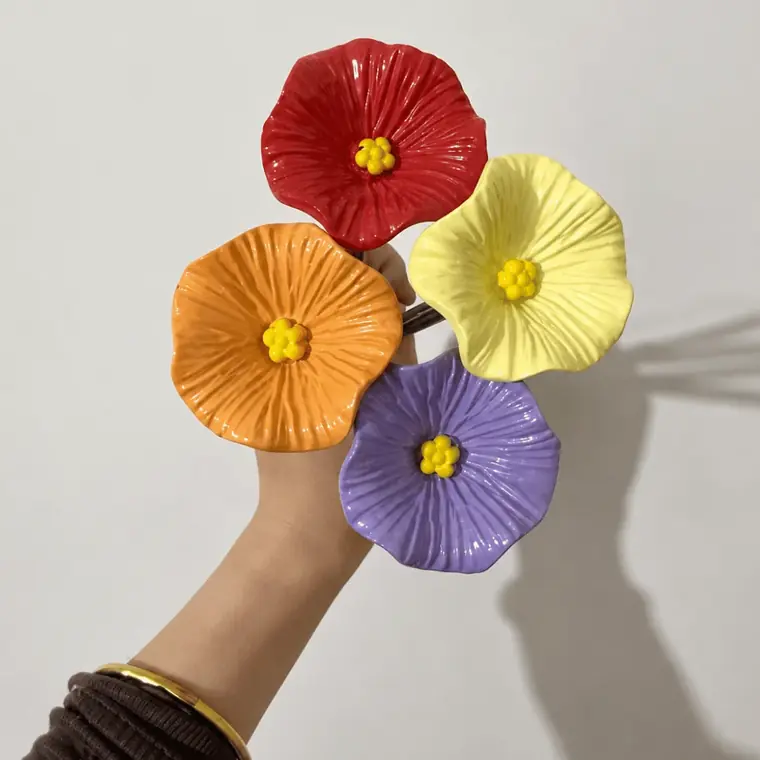
Each ceramic bloom attaches to its own metal stake, so the cups can be placed around beds, pots or planters rather than clustered in one spot.
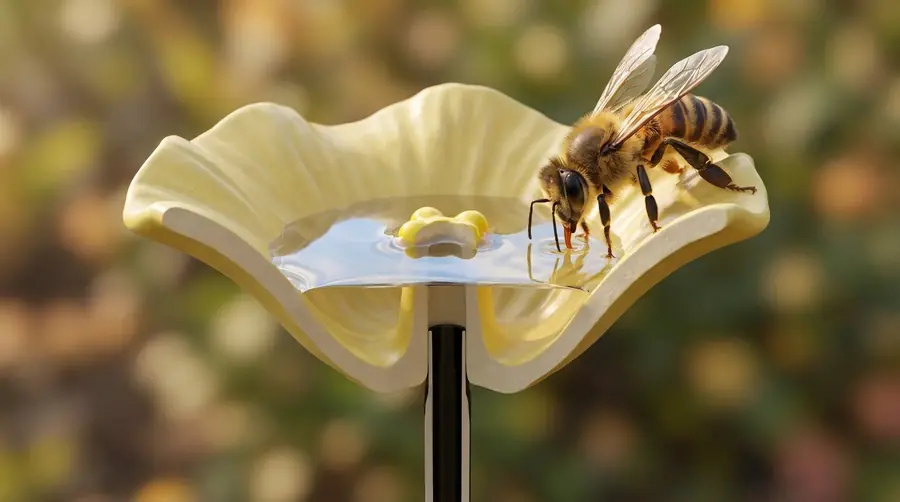
The open cup is intended to provide a low water level and a rim where insects can land. Keep it clean and never add honey or sugar.
The seller describes orange, purple, red and yellow finishes. Minor glaze variation is consistent with the hand-finished format.
Use in soil near flowers: beds, patio containers, vegetable plots, balconies or window boxes. Partial shade helps slow evaporation.
A repeatable routine
A bee water station works best as a clean, consistently shallow source—not as a set-and-forget garden ornament.
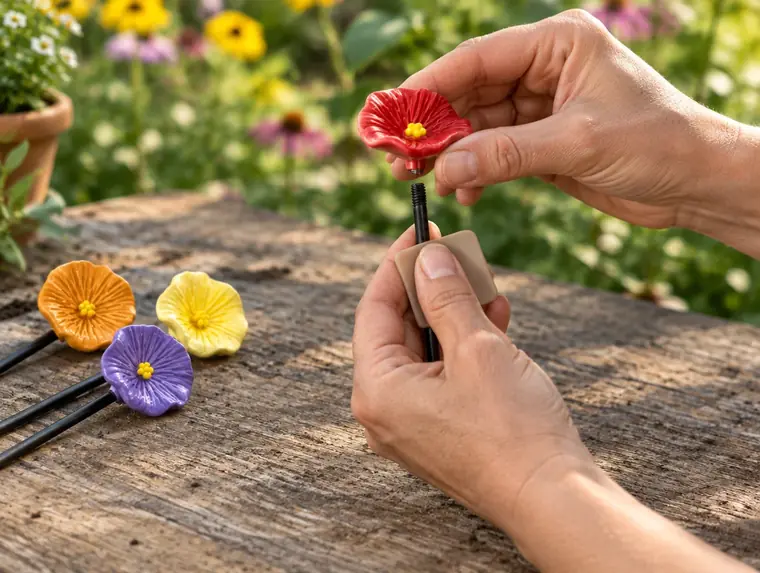
Attach the ceramic cup to the black metal stake without forcing the threads.
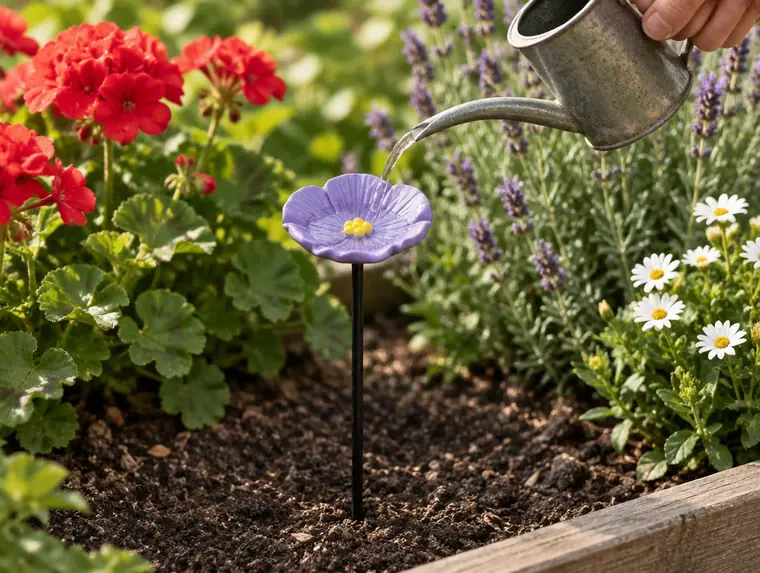
Choose stable soil near flowers, then add a shallow amount of fresh water.
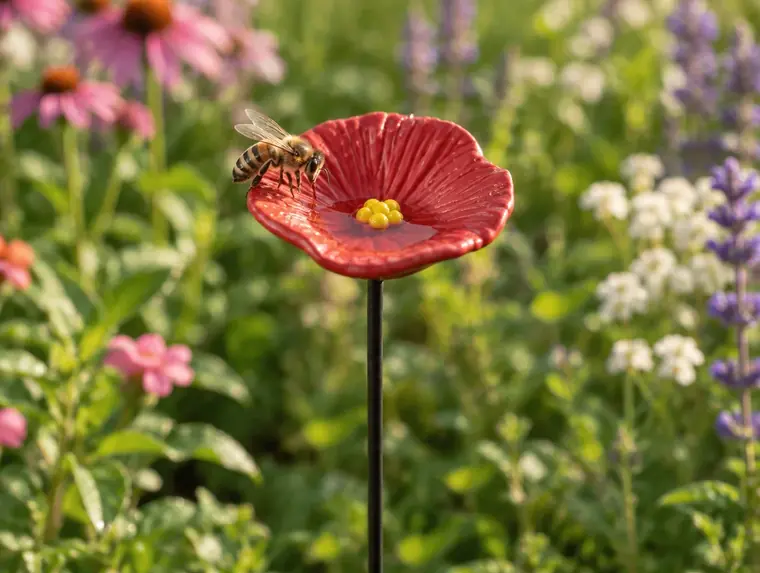
Top up in warm weather, change stale water and wipe the cup as needed.
Practical care
Independent wildlife guidance supports shallow water, secure landing places and regular cleaning. Plain fresh water is the useful choice.
A simple garden routine
The ceramic blooms are small garden vessels, so their value depends on thoughtful placement and regular attention rather than a complicated setup.
Place each stake in firm soil near flowering plants that already receive insect visits. Beds, patio containers, planters, vegetable plots, balconies and window boxes are all placements named by the seller. Partial shade is useful because it can slow evaporation during warm weather. Keep the bloom visible enough to check easily, but away from busy paths where feet, tools or pets could knock the ceramic cup. Spreading the four blooms across separate planted areas gives each one a clear location and makes the daily inspection more deliberate.
Fill only the shallow cup and leave the rim clear as a landing edge. Check the level regularly, especially on hot or windy days, because a small amount of water can disappear quickly. If leaves, soil or other debris collect in the bloom, empty it, wipe the surface and refill it with fresh water. Wildlife guidance recommends plain water rather than honey, syrup or sugar mixtures. A brief check while watering nearby plants is easier to maintain than waiting for the vessel to look dry or dirty.
The seller describes the hand-glazed ceramic finish as weather-resistant, but that does not remove the need for ordinary ceramic care. Inspect the cup and its connection to the metal stake when moving or refilling it. During severe frost, bringing the ceramic pieces indoors is a prudent way to reduce avoidable weather stress; this is practical guidance, not an additional seller warranty. Before storing a bloom, empty it, clean it and let it dry. Reinstall it in stable soil when conditions are suitable again.
Editorial review · no customer score
Our view: the set’s strongest idea is not a dramatic performance promise. It is the simple combination of a shallow ceramic cup, stable stake and placement beside flowers.
This assessment is based on verified seller materials and independent bee-watering guidance. We did not conduct a laboratory test, and we do not repeat customer-review totals as proof.
Price and promotion
The seller’s English product page displays a 70% savings message. We do not publish a dollar amount because current checkout totals and per-unit figures were not consistent enough to present reliably.
What you should verify: the current package, final total, shipping, taxes and guarantee terms on the order page before completing a purchase.
Common questions
Four ceramic blooms and four black metal stakes.
In stable soil in flower beds, patio pots, planters, vegetable gardens, balconies or window boxes.
Check it regularly, especially in warm weather. Refresh stale water and clean away debris.
The seller describes a weather-resistant finish, but bringing ceramic pieces in during severe frost is prudent practical care.